


What Are Tariffs, and Why Are They in the News?
Tariffs are government-imposed taxes on imported or exported goods. They’re used to protect domestic industries, regulate trade, and generate revenue. When a country imposes tariffs, it often makes foreign goods more expensive—giving domestic products a competitive edge.
As of April 2, 2025, the U.S. administration announced one of the largest tariff packages in decades:
• 10% baseline tariff on most global imports
• Higher tariffs on key trade partners: China (34%), Vietnam (46%), Taiwan (32%), European Union (20%), Japan (24%), India (26%), South Korea (25%)
• A 25% tariff on imported autos
These are designed to boost U.S. manufacturing, but they also create uncertainty—something markets don’t like. We'll unpack what this means for inflation, growth, and portfolios in the next two parts.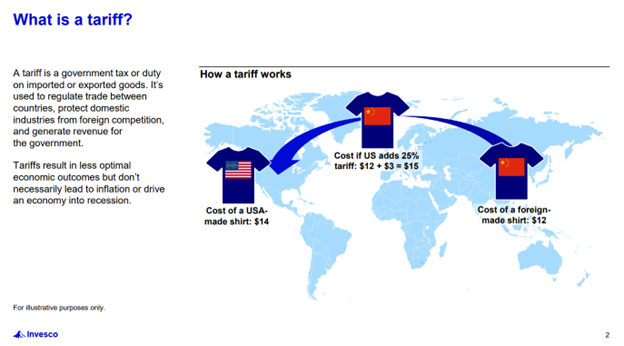
Will Tariffs Drive Inflation or Cause a Recession?
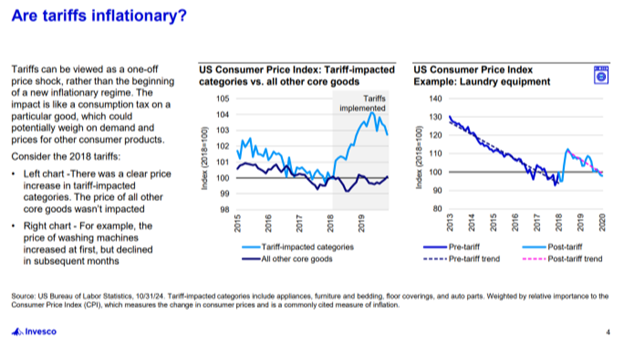
Not all tariffs lead to inflation or recessions—but they can create short-term ripple effects. Here's what we know:
• Price Impact: Tariffs act like a one-time tax on imports, which can raise prices on select goods (like autos, appliances, or textiles). But this is not the same as ongoing inflation across the board.
• Growth Impact: If companies face higher input costs, they may reduce spending, hiring, or raise prices. That can slow economic growth.
• Recession Risk? It's not our base case. The U.S. economy remains resilient with strong labor markets. However, policy uncertainty—not just the tariffs themselves—can temporarily dampen business investment and consumer confidence.
👉 Investor takeaway: Stay diversified and long-term focused. Reacting to short-term headlines can do more harm than good.
What Does This Mean for Markets and Your Portfolio?
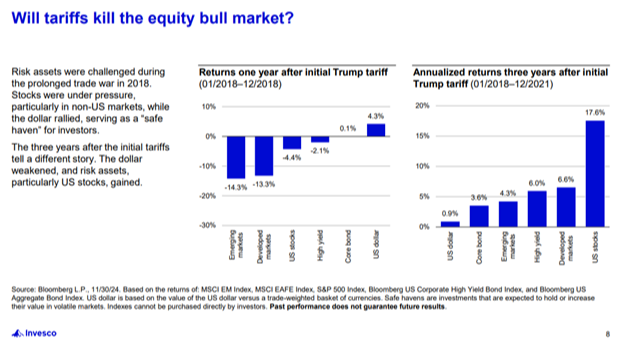
History offers some perspective. During the 2018–2020 trade war:
• Markets experienced short-term volatility, but long-term investors who stayed invested saw strong recovery—especially in U.S. stocks.
• Tariff-related uncertainty can drive increased market swings, but it rarely ends bull markets on its own.
What we’ve done already:
• We rebalanced portfolios at the end of Q4 2024, reducing exposure to overvalued sectors.
• Your strategy includes diversified exposure across asset classes and geographies—designed to weather periods like this.
In Conclusion: Tariffs may make headlines, but your plan is built on fundamentals, not forecasts. As always, we’re here to help you interpret market events and stay grounded in your long-term vision.
Other Resources: Staying the Course During Market Volatility